April 23, 2018
Guest Blog – Death or Deep Sleep by Rahul Mohaniya
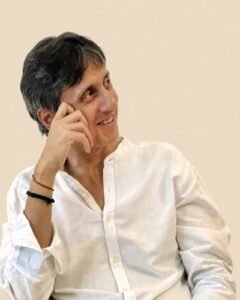
An excerpt from the book Master Knows Everything
Certain questions silently follow a human being throughout life, no matter how successful, spiritual, or fulfilled one appears to be. Among them, perhaps the deepest is the mystery of death. What truly dies? Where does a person go after the body drops? And why does the fear of death shape so much of human suffering?
In this deeply introspective excerpt from Master Knows Everything, Rahul Mohaniya reflects upon his lifelong fascination with death, the fear surrounding it, and the profound transformation that unfolded through the Grace of his Guru. What begins as a search to understand death gradually becomes a journey into the dissolution of the false sense of self.
Drawing from lived experience, spiritual inquiry, and the teachings of sages such as Nisargadatta Maharaj, Ramesh Balsekar, and his Guru, Gautam Sachdeva, this passage gently points toward a deeper understanding: that death is not the end of Consciousness, but the ending of separation, fear, and the illusion of personal doership.
The writing carries the simplicity and sincerity of direct experience rather than philosophical abstraction. Through memories of cremation grounds in Varanasi, moments of existential questioning, and the compassionate guidance of the Master, the author explores how the fear of death slowly dissolves into peace, surrender, and gratitude. What remains is not an intellectual conclusion, but a quiet recognition that the one who fears death was never truly real to begin with.
Death or Deep Sleep
In many satsangs, I have heard from Master that every fear is essentially the fear of death, and every form of suffering is caused by this fear. I was always curious to know about death—not as an objective experience, but as a subjective one. After a person’s death, the body remains in front of you, but you don’t know where the person has gone or what has happened to them. It was through facing this fear that Bhagavan realised his true nature.
I remembered that during my college days, I used to sit for hours, and sometimes even for days, praying to God, ‘I want to know death; please give me death,’ but He never fulfilled my wish. My curiosity and hunger to understand death remained because, from childhood, I had witnessed the deaths of many loved ones, and the mystery of death had always remained unresolved for me.
During my college days in Varanasi, whenever I didn’t feel okay, I used to go to the ghats near the Ganges, where dead bodies were always being burned. I found that just by watching all of this, I felt at ease and at peace, and every problem seemed to resolve itself.
When I met Master, all I wanted to know from him was about the experience of death. I heard from him that, ‘Death is nothing but a long, deep sleep, and do you hate or love deep sleep?’ This statement confirmed my love for death, and I realised that it wasn’t just me—everyone on this planet loves deep sleep more than anything else.
So, what was this fear about, and who really had the fear of death? The body didn’t know about death; it was just a machine that didn’t care whether it existed or not. As my understanding grows, I realise that fear of death is nothing but the fear of losing ignorance and the fear of losing beliefs and ideas that create separation and a false sense of doership.
As time passed, I faced all my fears in the presence of Master and realised that there is no one to die. If all there is is Consciousness, then who will die? All that will die is your sense of doership and separation. Just as in a dream, every character is created by your own mind, and when the character inside the dream realises that all there is is his own mind—that no other truly exists—then the sense of separation ends. But even after this realisation, the dream continues for as long as it is meant to.
I am deeply grateful to my Master. Through his light, I was able to face the deepest layers of ignorance in the human mind, and by his Grace, I learned to live without fear. Biological fear may still arise in the body, but the fear of death—the fear of ‘me,’ the imagined doer—falls away, as Ramesh Balsekar so clearly pointed out.
How beautiful each moment becomes when one realises that ‘only the dead can die,’ as Nisargadatta Maharaj so simply expressed.
This book is available globally through Amazon in Kindle and paperback formats. To order the book, please click here.
For any queries or feedback, the author can be contacted at rahulmohaniyaadvaita@gmail.com
Read :
 Nothing and the Centaur
- Guest Blog – Arunachala Girivalam by Vikrant Rawa
March 8, 2024
- Guest Blog – The Light of the Guru by Priya Tandon
October 1, 2024
- On The Occasion of Guru Purnima 2025
July 28, 2025
- Guest Blog – On Guru Tattva by Soojata Relle
August 14, 2026
- Guest Blog – On Discipline, or Niyama by Vishal Roy
September 28, 2026
- Hunting the Silence
October 5, 2026
- The End of Duality
September 20, 2020
- Advaita and the Energy Body
September 14, 2020
- True Apperception
April 25, 2019
- The World’s Best Astrologer
September 7, 2018